· Lee Chee Cheow, M.Sc. Dip CMP · Digestive Health · 4 min read
Can Probiotics Help With GERD? Evidence for Combining Probiotics with Acid-Reducing Medication
Proton pump inhibitors are the standard treatment for GERD, but they can disrupt gut bacteria in the process. Research has started looking at what happens when probiotics are added alongside PPI therapy — here's what the trials found.
Proton pump inhibitors (PPIs) are the standard, first-line medication for GERD, particularly for erosive oesophagitis and frequent symptoms. They work well for many people, but up to 50% of individuals remain symptomatic despite adequate acid suppression — a gap that has prompted researchers to look at what else might help alongside standard PPI therapy. One specific line of that research has focused on probiotics.
Why probiotics were considered for GERD in the first place
The rationale rests on three proposed mechanisms specific to probiotics in the digestive tract: improving oesophageal mucosal resistance, inhibiting reflux itself, and promoting healthier gut microecology overall. A systematic review in the journal Nutrients (2020) examined the relationship between GERD and probiotics on this basis, concluding that probiotic use appeared beneficial for GERD symptoms such as regurgitation and heartburn when considered across the available studies.
What the individual trials found
A randomised, double-blind, placebo-controlled trial published in Nutrients (2024) evaluated Bifidobacterium animalis subsp. lactis MH-02 as an adjunctive treatment — that is, used alongside, not instead of, standard care — in patients with reflux oesophagitis. The trial reported that adding this probiotic strain to standard treatment contributed to inhibiting acid reflux, alleviating gastrointestinal symptoms, reducing the time to symptom relief, and delaying symptom recurrence, while also enriching beneficial gastrointestinal microbiota and reducing adverse drug reactions associated with treatment.
A separate double-blind randomised clinical trial in Clinical Nutrition ESPEN (2022) looked specifically at how gastric acid suppression — the core action of PPI therapy — affects probiotic colonisation in the gut. The trial found that combining probiotics with PPI therapy could be a beneficial strategy, allowing the probiotic strains to colonise effectively while helping to counteract the disruption to gut microbiota that PPI use on its own can cause.
The pattern across this research
Read together, these studies point to probiotics filling a specific, complementary role in GERD management: not treating the reflux mechanism directly in the way acid-suppressing medication does, but potentially easing symptom burden, supporting recovery of a healthier gut microbiota during treatment, and reducing some of the medication-related downsides of long-term PPI use — an issue that matters given how commonly PPIs are prescribed on a long-term basis for GERD.
This is consistent with how PPI therapy is already managed more broadly. Long-term PPI use carries its own recognised trade-offs, including potential nutrient deficiencies, which is one reason people on long-term PPI therapy are often advised to consider multivitamin supplementation as a complementary measure — the same “alongside standard care” logic that applies to the probiotic research above.
What this doesn’t mean
None of this research suggests probiotics can replace PPI therapy or manage GERD on their own. The trials specifically studied probiotics as an add-on to standard acid-suppressing medication, in patients already receiving that standard care under medical supervision. Anyone on PPI therapy for GERD should continue that treatment as prescribed and discuss any supplement, including probiotics, with the doctor managing their care.
A daily probiotic for general gut wellness
Outside the specific research context above, many people take a probiotic simply as part of everyday gut-health maintenance, independent of any particular digestive condition or medication.
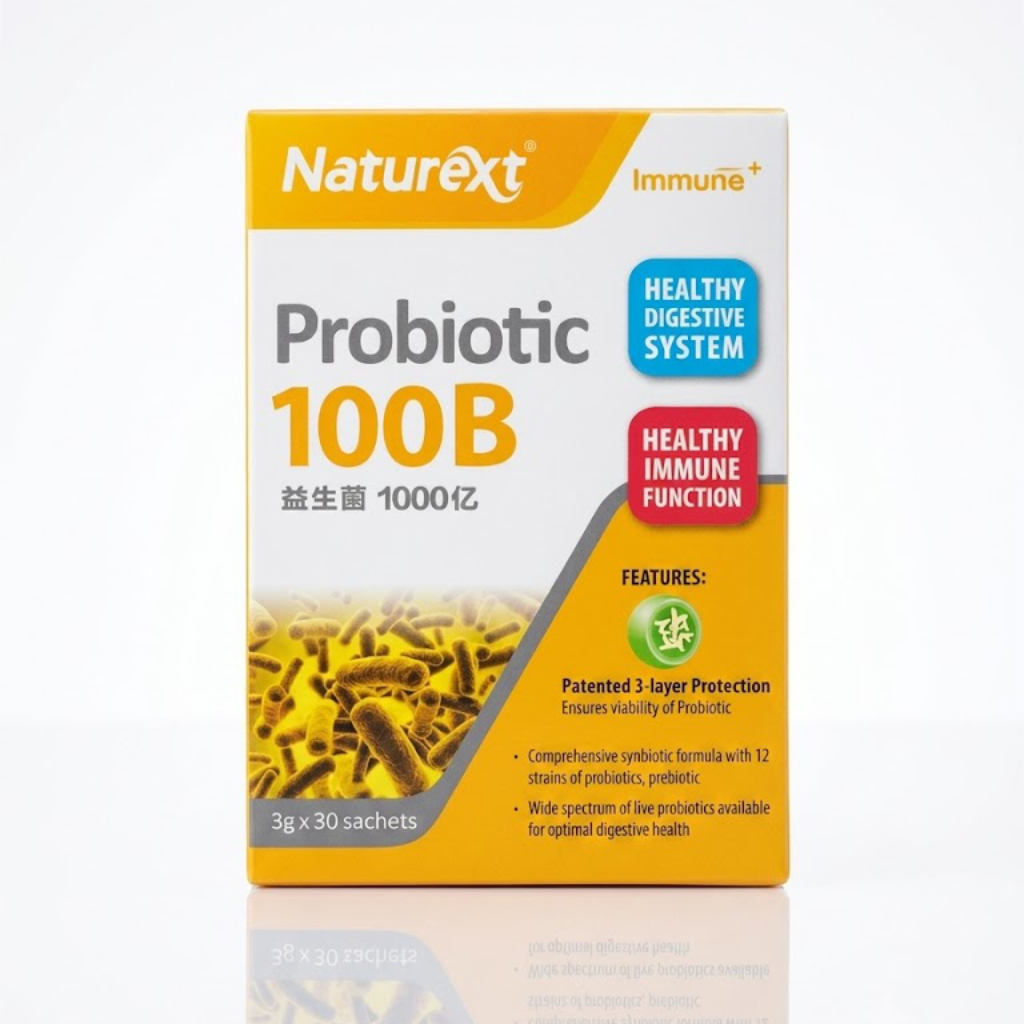
Naturext’s Probiotic 100B is a multi-strain synbiotic combining 12 complementary probiotic strains with prebiotic fibres (inulin and β-glucan) and a Vitamin B complex, delivering more than 120 billion CFU per sachet. LABCOT™ triple-coating technology helps the live bacteria survive stomach acid, and the product is shelf-stable for 24 months at room temperature with no refrigeration required — a practical difference from chilled probiotic drinks that must be kept cold and consumed quickly. It is formulated as a general daily-wellness supplement to support a balanced gut microbiome, not as a treatment for GERD or a substitute for prescribed acid-reducing medication.
Frequently asked questions
Can I stop taking my PPI medication if I add a probiotic? No. The research on probiotics and GERD studies them as a complement to standard PPI therapy, not a replacement. Any change to prescribed medication should be discussed with the doctor managing your care.
Do probiotics interfere with how PPIs work? The research reviewed here suggests the opposite may be true in some respects — one study found that combining probiotics with PPI therapy allowed for effective probiotic colonisation while helping offset the gut microbiota disruption that PPI use can cause on its own.
Is it worth taking a probiotic if I’m not on PPI therapy or don’t have GERD? Many people take a daily probiotic as part of general gut-health maintenance regardless of whether they have a specific digestive condition. That everyday use is distinct from the clinical research on probiotics as a GERD treatment add-on discussed above.
This article is for general information only and does not constitute medical advice. If you have GERD or are on prescribed acid-reducing medication, consult your doctor before starting any new supplement.