· Lee Chee Cheow, M.Sc. Dip CMP · Digestive Health · 4 min read
Can Probiotics Help With Indigestion? What the Research Shows
Several recent clinical trials have looked specifically at probiotics in functional dyspepsia — with some studies reporting improvements not just in digestive symptoms but in anxiety too. Here's a closer look at what the studies actually found.
Functional dyspepsia — persistent indigestion with no structural cause found on testing — is now understood as a disorder of gut–brain interaction, with gut microbiota changes recognised as one of several contributing mechanisms. That connection has made probiotics a specific and active area of clinical research in this condition over the past several years.
What the functional dyspepsia trials looked at
A 2025 study in Frontiers in Microbiology examined probiotic use specifically in functional dyspepsia patients who also had anxiety, looking at intestinal mucosal permeability alongside symptom and anxiety scores. The researchers reported that probiotic intervention was associated with meaningful improvement in both the digestive symptoms and the anxiety scores of this patient group — a notable finding given how often chronic digestive discomfort and anxiety occur together.
Other recent trials have looked at specific, well-defined probiotic strains:
- A randomised, placebo-controlled trial published in Nature Communications (2024) tested Bifidobacterium animalis subsp. lactis BL-99 specifically in functional dyspepsia patients, examining its effect on their digestive symptoms over the trial period.
- A pilot randomised, double-blind, placebo-controlled trial in The Lancet Gastroenterology & Hepatology (2021) assessed spore-forming probiotics in functional dyspepsia and reported them to be both effective and safe within the scope of that trial.
- A systematic review and meta-analysis in the journal Medicine (2020), pooling data across multiple trials of prebiotics and probiotics in functional dyspepsia, found the combined evidence pointed toward a meaningful benefit for this patient group.
Taken together, this body of research represents one of the more specific and consistent areas of probiotic clinical study — distinct from the broader, more general gut-health research covered elsewhere on this site.
What this research does and does not mean
These trials studied probiotics as an intervention within a clinical trial setting, in patients with a diagnosed functional dyspepsia presentation — not as a general claim that any probiotic product manages or resolves indigestion for everyone. The specific bacterial strains tested, dosing, and trial duration all varied between studies, and functional dyspepsia itself is a genuinely individual condition with multiple contributing mechanisms, as covered elsewhere in this series. None of this research positions probiotics as a replacement for proper medical assessment of persistent digestive symptoms, especially where alarm features are present.
What it does suggest is a plausible biological rationale: since altered gut microbiota is one of the recognised mechanisms in functional dyspepsia, and gut-brain signalling is closely tied to both digestive symptoms and anxiety, probiotic strains capable of influencing the gut microbiome are a logical area for continued research in this specific condition.
Everyday gut support, not a targeted treatment
Separate from the clinical trial context above, many people take a daily probiotic simply as part of general gut-health maintenance — supporting a balanced microbiome as part of an everyday wellness routine, rather than targeting a specific diagnosed condition.
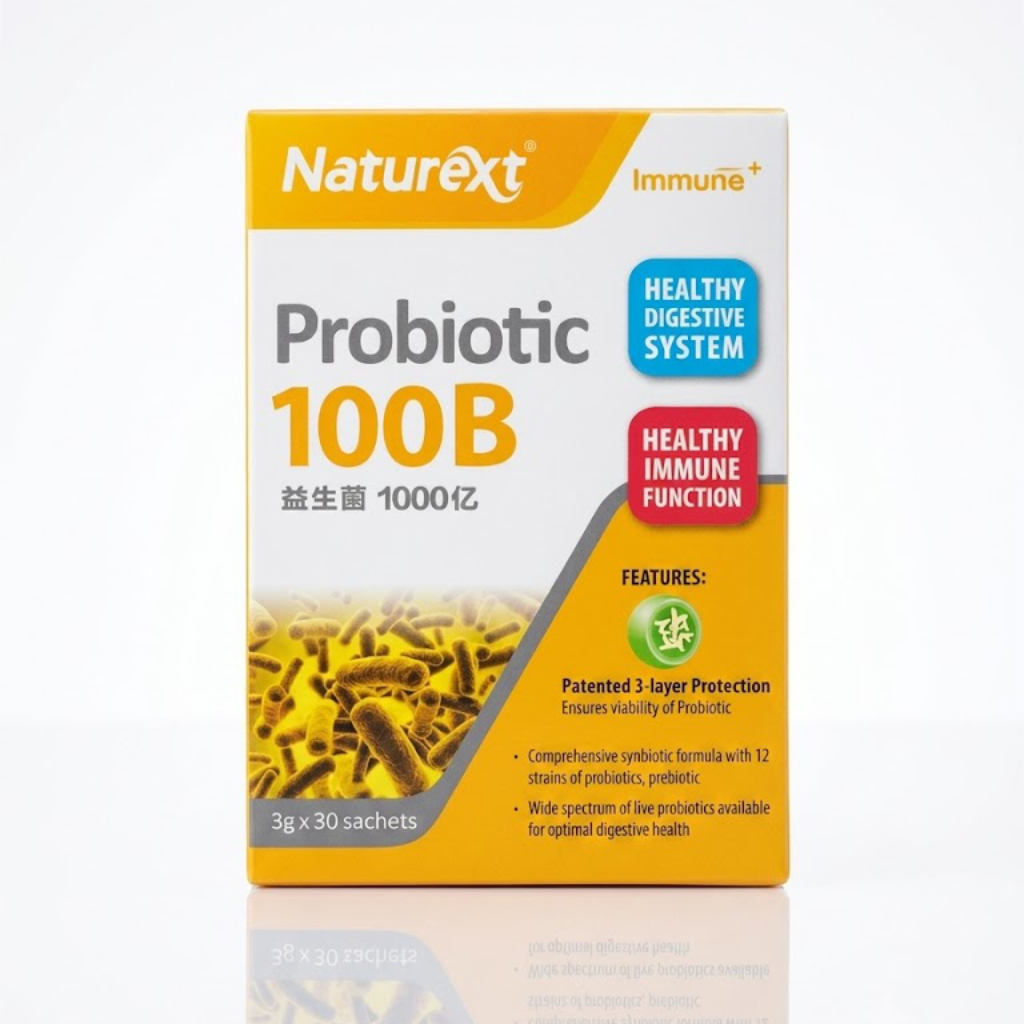
Naturext’s Probiotic 100B is built for that everyday role. It combines 12 complementary probiotic strains with prebiotic fibres (inulin and β-glucan) and a Vitamin B complex, delivering over 120 billion CFU per sachet, with LABCOT™ triple-coating technology to help the live bacteria survive stomach acid on the way through. It is shelf-stable for 24 months at room temperature, unlike chilled probiotic drinks that need refrigeration and quick use. It is intended as a general daily-wellness supplement to support a balanced gut microbiome — not as a treatment for functional dyspepsia or any other specific digestive condition.
Frequently asked questions
Do probiotics cure functional dyspepsia? No. Clinical research has looked at whether certain probiotic strains may help improve symptoms in functional dyspepsia patients, with encouraging results in several trials, but this is not the same as a cure. Functional dyspepsia has multiple contributing mechanisms and no single intervention resolves it for everyone.
Which probiotic strain is best for indigestion? The research cited above studied specific, well-defined strains (such as Bifidobacterium animalis subsp. lactis BL-99) and spore-forming probiotic formulations under trial conditions. General over-the-counter probiotic supplements are not identical to the exact strains and doses used in these trials, so results should not be assumed to transfer directly.
Should I take a probiotic instead of seeing a doctor about my indigestion? No. If indigestion is persistent, worsening, or accompanied by warning signs such as weight loss or difficulty swallowing, medical assessment should come first. A daily probiotic can be a reasonable part of general gut-health maintenance alongside — not instead of — appropriate medical care.
This article is for general information only and does not constitute medical advice. If you have persistent or worsening indigestion, consult your doctor before starting any new supplement.