· Lee Chee Cheow, M.Sc. Dip CMP · Digestive Health · 4 min read
Probiotics as an Add-On to H. Pylori Treatment: What Studies Show
Standard H. pylori treatment relies on antibiotics — but a growing body of research has looked at whether adding probiotics alongside that treatment improves outcomes and tolerability. Here is what the studies found.
Standard treatment for H. pylori infection relies on antibiotic-based eradication therapy, usually combined with acid-suppressing medication. It works, but it is not always comfortable — antibiotics can bring their own side effects, and eradication is not guaranteed on the first attempt. That gap is exactly what a specific line of clinical research has focused on: what happens when probiotics are added alongside standard antibiotic care, rather than used on their own.
What researchers have measured
It is worth being precise about what this research actually asks. None of the studies below suggest probiotics as a substitute for antibiotic-based eradication therapy — the question they investigate is narrower and more practical: does adding a probiotic alongside standard treatment change how well that treatment works or how easy it is to tolerate?
A systematic review and meta-analysis of randomised controlled trials — 13 RCTs covering 2,306 patients, published in PLoS One (2016) — looked at probiotic supplementation during anti-H. pylori treatment and found it was associated with improved eradication rates and reduced symptoms during therapy. A separate systematic review and network meta-analysis focused on children (European Journal of Clinical Pharmacology, 2017) reported that probiotic-supplemented triple therapy significantly increased H. pylori eradication rates while reducing the overall incidence of side effects. A broader review in World Journal of Clinical Cases (2023) similarly discusses probiotics specifically in their role as adjunctive medications within anti-H. pylori regimens — language that reflects how this research is actually framed: as a complement to antibiotics, not a replacement for them.
A related systematic review and meta-analysis in the journal Diseases (2023) looked more broadly at probiotic use in adults with gastroenteritis-type presentations, adding further support to the pattern that probiotic supplementation alongside standard antibacterial care is associated with better tolerability.
The three consistent findings
Across this body of research, three outcomes come up repeatedly when probiotics are added to standard H. pylori eradication regimens:
- A modest increase in eradication rates — treatment succeeding on the first course more often
- Fewer antibiotic-related side effects, particularly diarrhoea and abdominal discomfort
- Better overall treatment tolerability and adherence — patients more able to complete the full antibiotic course as prescribed
That last point matters clinically in its own right: incomplete antibiotic courses are one of the more common reasons eradication therapy fails on the first attempt, so anything that helps someone tolerate and finish their prescribed treatment has practical value independent of any direct antibacterial effect.
What this doesn’t change
None of this research repositions probiotics as a treatment for H. pylori infection itself. Eradication of H. pylori requires antibiotic-based therapy prescribed by a doctor, and that remains the case regardless of whether probiotics are used alongside it. The research summarised here is specifically about probiotics as a well-tolerated companion to that standard care — easing the antibiotic side-effect burden and modestly supporting the treatment’s own effectiveness, not doing the eradication work on their own.
Everyday gut support alongside — or apart from — treatment
Outside the specific context of H. pylori eradication therapy, a daily probiotic is something many people take simply as part of ongoing gut-health maintenance, independent of any particular treatment course.
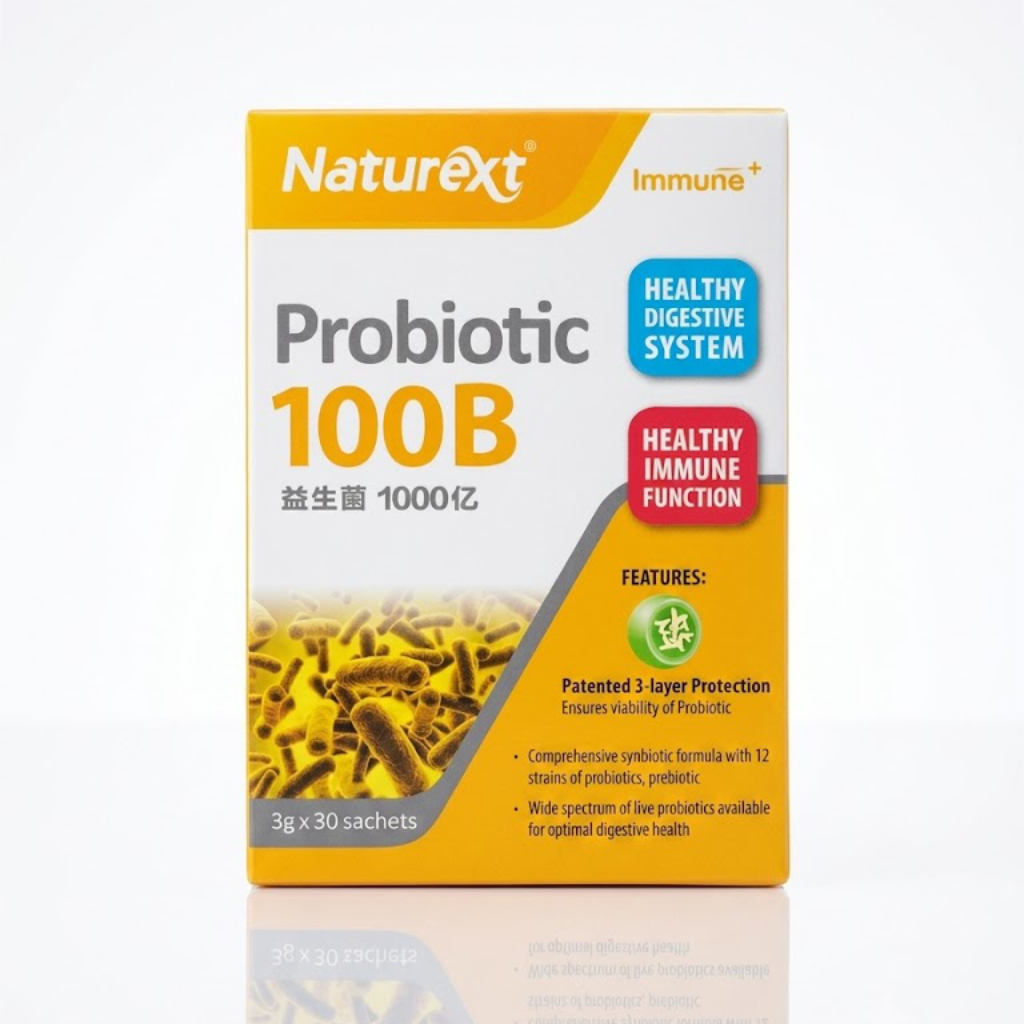
Naturext’s Probiotic 100B delivers over 120 billion CFU across 12 complementary probiotic strains per sachet, along with prebiotic fibres (inulin and β-glucan) and a Vitamin B complex, protected by LABCOT™ triple-coating technology so more of the live bacteria survive the trip through stomach acid. It is shelf-stable for 24 months at room temperature, with no refrigeration required. It is formulated as a general daily-wellness supplement to support a balanced gut microbiome — it is not an eradication therapy, and it is not a substitute for antibiotic-based H. pylori treatment prescribed by a doctor.
Frequently asked questions
Can probiotics eradicate H. pylori on their own? No. Eradication requires antibiotic-based therapy prescribed by a doctor. The research on probiotics in this context studies them specifically as an add-on to that standard treatment, not as a stand-alone eradication method.
Should I take a probiotic while I’m on antibiotics for H. pylori? This is worth discussing with the doctor managing your treatment, since timing relative to antibiotic doses and the specific regimen prescribed can matter. The research reviewed above studied probiotics as a companion to standard care under clinical supervision.
Why would probiotics reduce antibiotic side effects? Antibiotic therapy can disrupt the balance of gut bacteria, which is one contributor to side effects like diarrhoea and abdominal discomfort during treatment. Supplementing with probiotic strains during this period is the mechanism explored in the research summarised above.
This article is for general information only and does not constitute medical advice. If you have or suspect H. pylori infection, consult your doctor for proper testing and treatment.