· Lee Chee Cheow, M.Sc. Dip CMP · Kidney Health · 6 min read
Astragalus, Hawthorn, Ginseng and CoQ10: The Ingredients Behind Cardio CPS
Four ingredients keep appearing together in heart health research — two TCM herbal staples, an adaptogen, and a cellular-energy nutrient. Here's an overview of what the research on each one covers.
Chronic kidney disease and cardiovascular health are closely intertwined — declining kidney function is a well-established risk factor for cardiovascular events, and heart failure is one of its most serious associated complications. That relationship is part of why several ingredients traditionally used in Traditional Chinese Medicine (TCM), alongside modern nutritional compounds, keep showing up together in cardiovascular research. Four in particular — Astragalus, hawthorn, Panax ginseng, and Coenzyme Q10 (CoQ10) — have each been studied individually for their relationship to heart function. Here’s an overview of what that research covers.
Astragalus membranaceus (黄芪)
Astragalus root is one of the most widely used tonic herbs in TCM, and it has also been studied as an adjunct alongside conventional cardiovascular treatment. A systematic review and meta-analysis published in Frontiers in Pharmacology in 2024 examined combining Astragalus membranaceus with conventional therapy in patients with heart failure with reduced ejection fraction (HFrEF), and found the combination showed more benefit for left ventricular remodelling and overall clinical measures than conventional therapy alone. Separately, broader TCM literature on Astragalus lists it as an adjuvant herb used across CKD Stages 2–4, particularly in the context of diabetic nephropathy, generally dosed at 5–30 g of dried root, or 500–2,000 mg of standardised extract taken two to three times daily. As with any herbal supplement, it carries safety considerations — Astragalus may interact with anticoagulant medications and can potentially compound the blood-pressure-lowering effect of antihypertensive drugs.
Hawthorn berry extract
Hawthorn has a long history of use in both TCM and European herbal medicine for cardiovascular support. It’s notable for having been formally evaluated by Germany’s Commission E — the country’s official scientific advisory body for herbal medicines — which assessed hawthorn leaf-with-flower extract in the context of heart failure. A meta-analysis of randomised trials published in the American Journal of Medicine in 2003 reviewed hawthorn extract as an oral option studied in chronic heart failure, looking at outcomes across the available randomised evidence at the time. The research on hawthorn generally centres on its traditional use for circulatory support alongside these more formal evaluations.
Panax ginseng
Panax ginseng is traditionally valued in TCM for supporting energy, vitality, and overall resilience, and it has also been studied specifically in relation to cardiac tissue. Research published in Circulation: Heart Failure examined ginseng’s effect on cardiomyocyte (heart muscle cell) hypertrophy — enlargement of heart muscle cells — including hypertrophy that develops after a heart attack, and found that ginseng was associated with reversing established hypertrophy in the models studied, offering what the researchers described as a potentially effective approach for addressing myocardial remodelling processes. Ginseng is also studied outside the cardiovascular space, including research on its role in supporting bone marrow function and red blood cell production, generally at doses of 200–400 mg per day of standardised extract.
Coenzyme Q10 (CoQ10)
CoQ10 is a naturally occurring compound the body uses in cellular energy production, particularly in tissues with high energy demands like heart muscle, and it also has antioxidant properties. It’s one of the more extensively studied nutrients in this group. The Q-SYMBIO trial, a randomised double-blind study published in JACC: Heart Failure, followed people with chronic heart failure over the long term and found that CoQ10 treatment was associated with improved symptoms and a reduction in major adverse cardiovascular events, with the researchers characterising it as a safe long-term adjunct in that population. A separate meta-analysis published in BMC Cardiovascular Disorders in 2024 reviewed randomised controlled trials of CoQ10 in heart failure and found it associated with a substantial reduction in all-cause mortality compared with standard care alone. CoQ10 has also been studied specifically in the context of kidney health: a 2018 systematic review in Current Pharmaceutical Design found CoQ10 supplementation was associated with improvements in metabolic markers — including total cholesterol, LDL cholesterol, and creatinine — in people with chronic kidney disease. Separate research combining CoQ10 with selenium, published in Nutrients in 2020, followed selenium-deficient elderly participants over 48 months and found the treatment group’s kidney function (measured by eGFR) improved from roughly 58.5 to 72.5, compared with a smaller improvement (roughly 59 to 64) in the placebo group.
Why these four, together
Each of these ingredients has an independent research trail, but they cluster together in cardiovascular research for a reason: Astragalus and hawthorn represent the TCM tradition of supporting heart and circulatory function through botanical means, Panax ginseng contributes an adaptogenic, energy- and vitality-supporting angle with some direct evidence in heart tissue models, and CoQ10 addresses the cellular energy and antioxidant side of heart muscle function from a nutritional-biochemistry angle. Together they cover several complementary mechanisms rather than duplicating the same one.
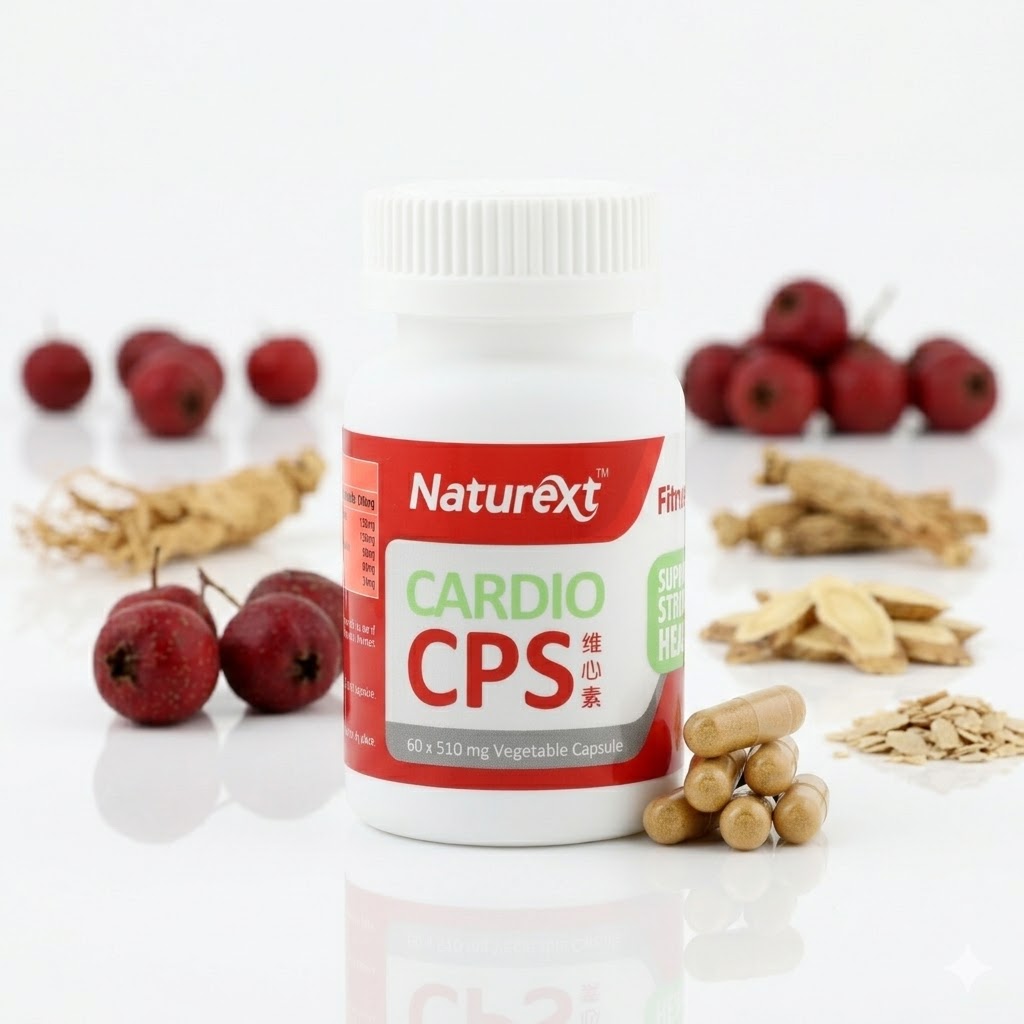
Naturext’s Cardio CPS brings all four together in a single daily capsule — 144mg of Astragalus membranaceus root extract, 144mg of hawthorn berry extract, 96mg of Panax ginseng extract standardised to 80% ginsenosides, and 28mg of Coenzyme Q10, along with 58mg of selenium yeast to round out the formula. It’s formulated as a TCM-inspired daily supplement to support everyday heart and circulatory wellness — Astragalus and hawthorn are traditionally used in TCM for this purpose — rather than as a treatment for heart failure or any other diagnosed cardiovascular condition.
Frequently asked questions
Can these ingredients replace heart failure medication? No. The research summarised above generally studies these ingredients as adjuncts alongside standard medical care, not as replacements for it. Anyone with a diagnosed cardiovascular condition should continue following their doctor’s treatment plan and discuss any supplement with them first.
Is Astragalus safe to take with blood pressure or blood-thinning medication? Not automatically — Astragalus has documented potential interactions with anticoagulant medications and may add to the effect of antihypertensive drugs. Anyone on these medications should check with their doctor or pharmacist before adding an Astragalus-containing supplement.
Why is CoQ10 relevant to kidney health as well as heart health? Separate research has looked at CoQ10, sometimes combined with selenium, in relation to kidney function markers, with some studies finding associated improvements in metabolic and kidney-function measures. This reflects the broader overlap between cardiovascular and kidney health rather than a claim that CoQ10 treats kidney disease.
This article is for general information only and does not constitute medical advice. If you have a diagnosed heart or kidney condition, consult your doctor before starting any new supplement.